Making everyday payments feel clear and predictable.
Making everyday payments feel clear and predictable.
End-to-end Experience Design
End-to-end Experience Design
07
Overview
Overview
Stantpay is a mobile-first payment platform designed to simplify everyday transactions through fast transfers, wallet management, and secure digital payments.
This project focused on designing a clear, trustworthy mobile experience that makes sending, receiving, and managing money feel simple and predictable. The goal was to reduce friction for first-time users while ensuring the product could scale across core financial flows such as onboarding, transfers, and account management.
The outcome is a cohesive mobile experience that balances speed, clarity, and trust within a regulated financial context.
Stantpay is a mobile-first payment platform designed to simplify everyday transactions through fast transfers, wallet management, and secure digital payments.
This project focused on designing a clear, trustworthy mobile experience that makes sending, receiving, and managing money feel simple and predictable. The goal was to reduce friction for first-time users while ensuring the product could scale across core financial flows such as onboarding, transfers, and account management.
The outcome is a cohesive mobile experience that balances speed, clarity, and trust within a regulated financial context.
Duration
8–10 weeks
8–10 weeks
Role:
Product Designer
Product Designer
Platforms:
Mobile (iOS & Android)
Mobile (iOS & Android)
Focus Areas:
Fintech
Fintech
Context
& Problem
Context & Problem
StantPay’s product promise is simple pay, send, and manage everyday transactions quickly but the first-time experience didn’t feel simple. Early flows asked users to make too many decisions too soon (multiple routes, dense forms, and limited guidance). For new users, that created hesitation at the exact moment the product needed to build confidence. The main challenge was reducing early friction without removing security cues that make a fintech app feel trustworthy.
The first interaction with StantPay required users to authenticate before they understood what the product enabled, how security worked, or what would happen next. For new users, this created hesitation at the exact moment the product needed to establish trust and momentum.
StantPay’s product promise is simple pay, send, and manage everyday transactions quickly but the first-time experience didn’t feel simple. Early flows asked users to make too many decisions too soon (multiple routes, dense forms, and limited guidance). For new users, that created hesitation at the exact moment the product needed to build confidence. The main challenge was reducing early friction without removing security cues that make a fintech app feel trustworthy.
The first interaction with StantPay required users to authenticate before they understood what the product enabled, how security worked, or what would happen next. For new users, this created hesitation at the exact moment the product needed to establish trust and momentum.
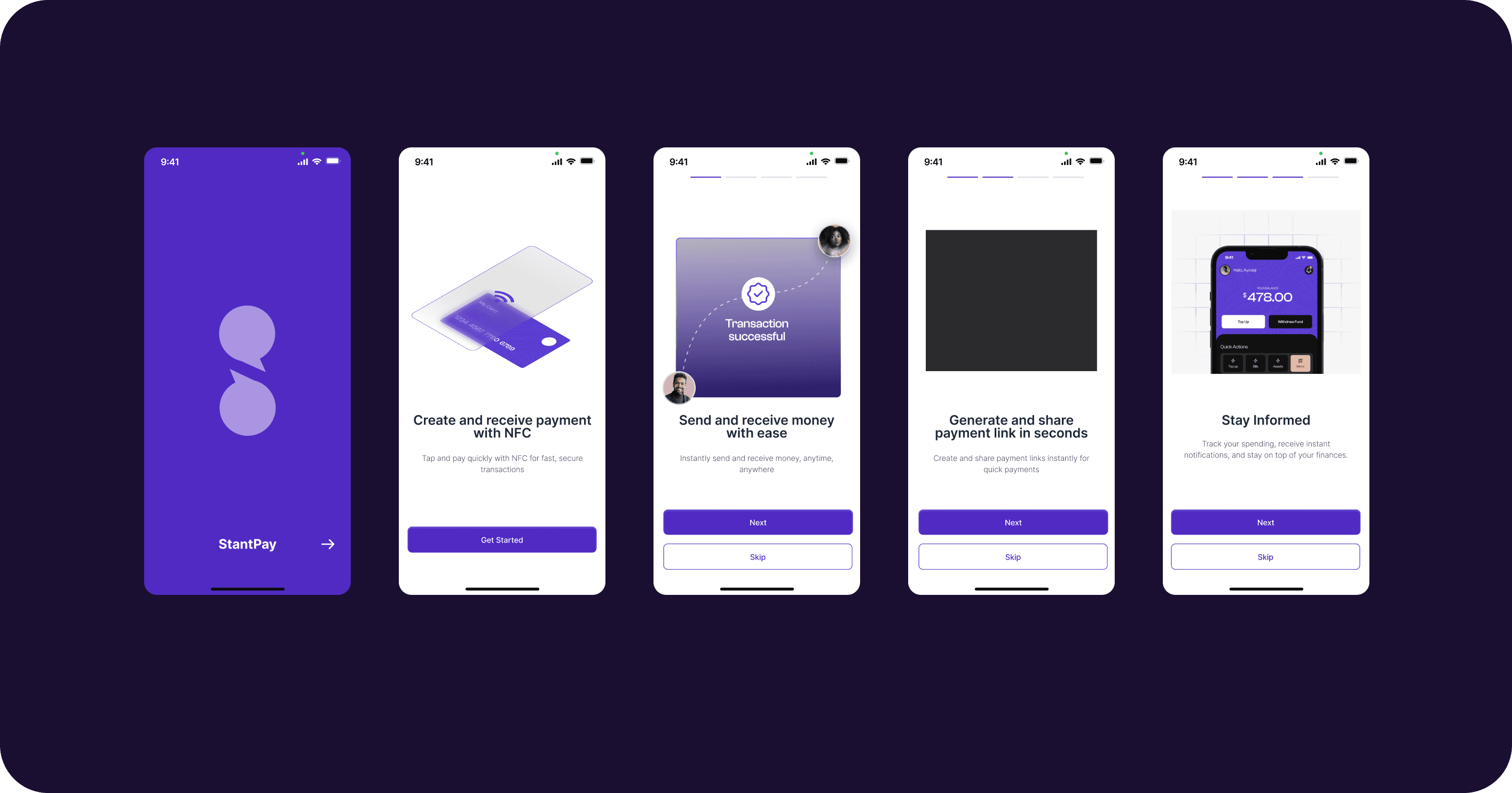
Early onboarding focused on features, but didn’t clearly prepare users for what comes next.
Early onboarding focused on features, but didn’t clearly
prepare users for what comes next.
Where friction first appeared
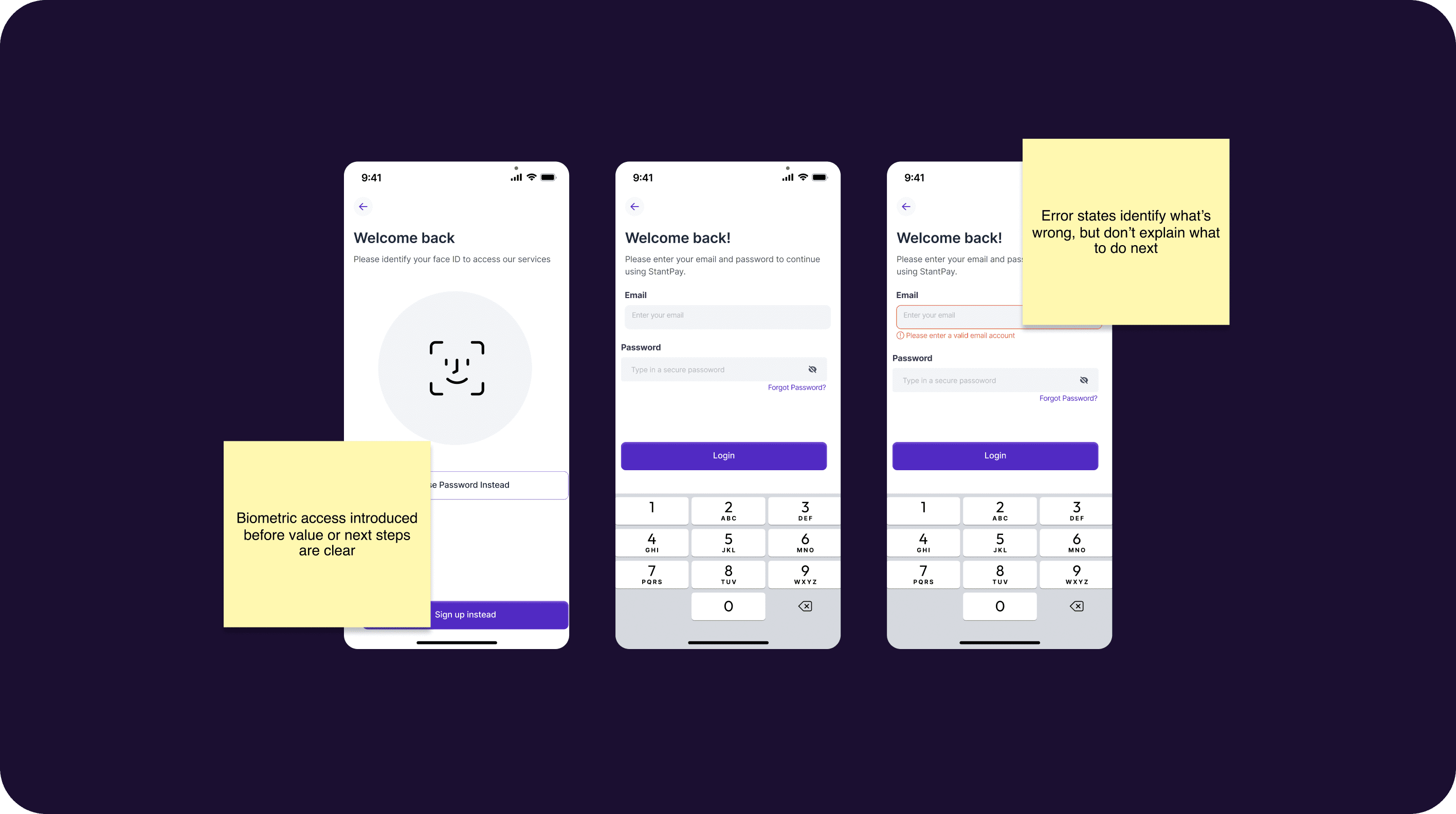
Early authentication entry point (baseline experience)
Early authentication entry point (baseline experience)
What users were asked to do:
Authenticate immediately
Choose between biometric or password
Resolve errors without guidance
What users were asked to do:
Authenticate immediately
Choose between biometric or password
Resolve errors without guidance
Before they understood:
What actions were available
Why security was needed now
What success looked like
Before they understood:
What actions were available
Why security was needed now
What success looked like
My Role & Constraints
My Role & Constraints
I worked as the Product Designer, responsible for shaping the end-to-end experience across onboarding, authentication, and early transaction flows. I partnered closely with product and engineering to translate user friction into clear design priorities, balancing usability with the security expectations of a fintech product.
Key responsibilities included:
Auditing the existing onboarding and authentication experience
Leading UX exploration and flow redesigns for first-time users
Defining interaction patterns that clarified security without increasing cognitive load
Collaborating with engineers to ensure designs were feasible within technical constraints
Constraints
This project required navigating several non-negotiable constraints that directly influenced design decisions:
Security-first requirements Authentication steps (biometrics, OTP, credentials) were mandatory early in the experience and could not be removed.
Limited user tolerance for complexity Many users were new to crypto and fintech tools, increasing sensitivity to unclear steps and dense forms.
Engineering and timeline constraints Changes needed to work within an existing architecture and be deliverable within an 8-week timeline.
Trust had to be earned quickly Any redesign needed to maintain credibility while reducing friction removing steps was not an option, but reframing them was.
I worked as the Product Designer, responsible for shaping the end-to-end experience across onboarding, authentication, and early transaction flows. I partnered closely with product and engineering to translate user friction into clear design priorities, balancing usability with the security expectations of a fintech product.
Key responsibilities included:
Auditing the existing onboarding and authentication experience
Leading UX exploration and flow redesigns for first-time users
Defining interaction patterns that clarified security without increasing cognitive load
Collaborating with engineers to ensure designs were feasible within technical constraints
Constraints
This project required navigating several non-negotiable constraints that directly influenced design decisions:
Security-first requirements Authentication steps (biometrics, OTP, credentials) were mandatory early in the experience and could not be removed.
Limited user tolerance for complexity Many users were new to crypto and fintech tools, increasing sensitivity to unclear steps and dense forms.
Engineering and timeline constraints Changes needed to work within an existing architecture and be deliverable within an 8-week timeline.
Trust had to be earned quickly Any redesign needed to maintain credibility while reducing friction removing steps was not an option, but reframing them was.
These constraints shaped the design approach, pushing the solution toward clarity, guidance, and predictability rather than simplification through removal.
These constraints shaped the design approach, pushing the solution toward clarity, guidance, and predictability rather than simplification through removal.
DISCOVERY &
KEY INSIGHTS
DISCOVERY & KEY INSIGHTS
To understand where users were struggling, I audited the existing onboarding and authentication flows and validated findings through usability reviews and early feedback from first-time users. The focus was on identifying where hesitation, confusion, or trust breakdown occurred before users completed their first successful action.
Research methods
Usability review of onboarding & auth flows
First-time user walkthroughs
Error-state and edge-case audit
Funnel drop-off review (pre-authentication)
To understand where users were struggling, I audited the existing onboarding and authentication flows and validated findings through usability reviews and early feedback from first-time users. The focus was on identifying where hesitation, confusion, or trust breakdown occurred before users completed their first successful action.
Research methods
Usability review of onboarding & auth flows
First-time user walkthroughs
Error-state and edge-case audit
Funnel drop-off review (pre-authentication)
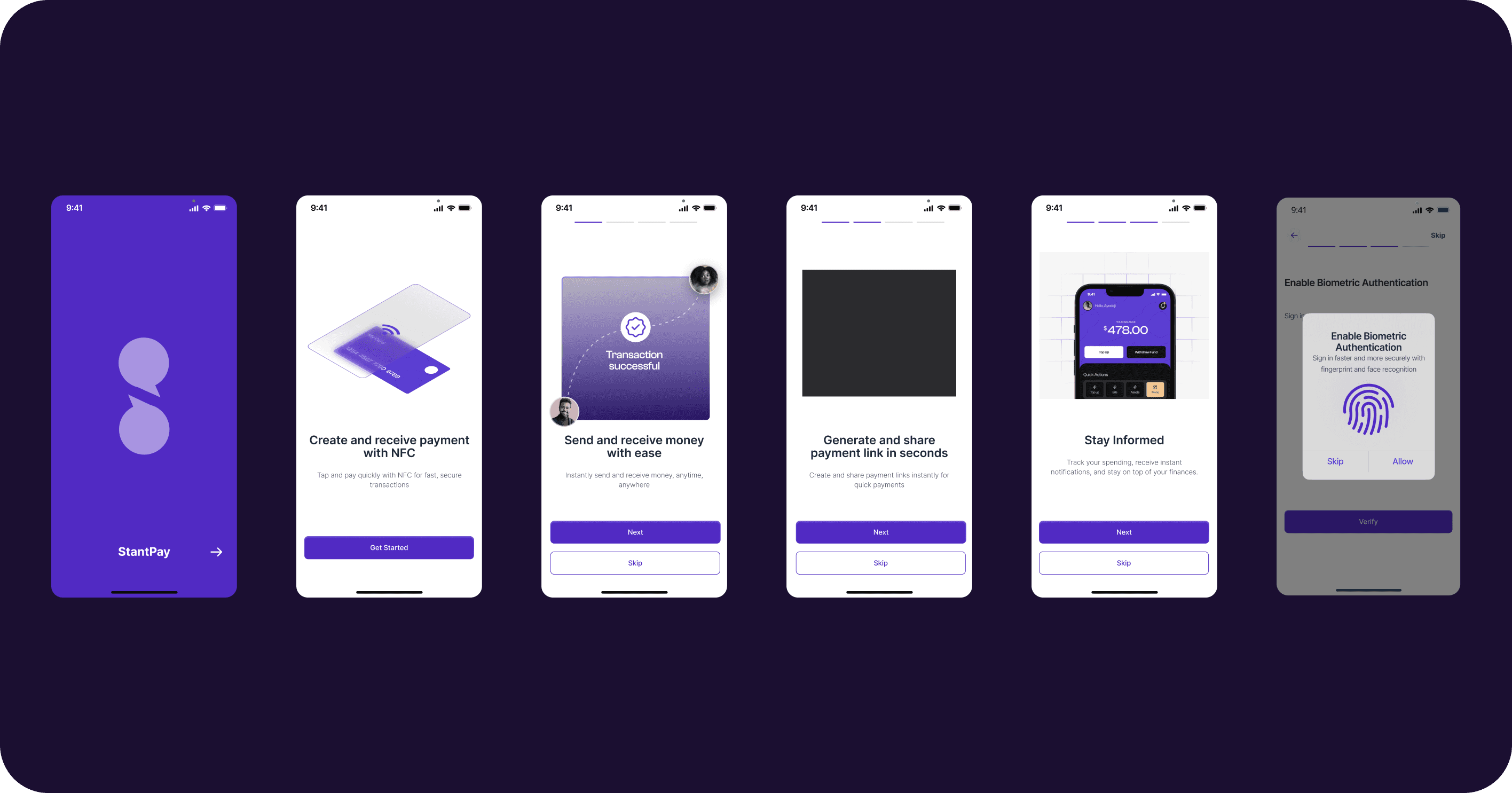
Screens reviewed during discovery, focusing on first-time entry and early decision points.
Screens reviewed during discovery, focusing on first-time entry and early decision points.
Key Insights
These patterns repeated consistently across onboarding and authentication flows.
Key Insights
These patterns repeated consistently across onboarding and authentication flows.
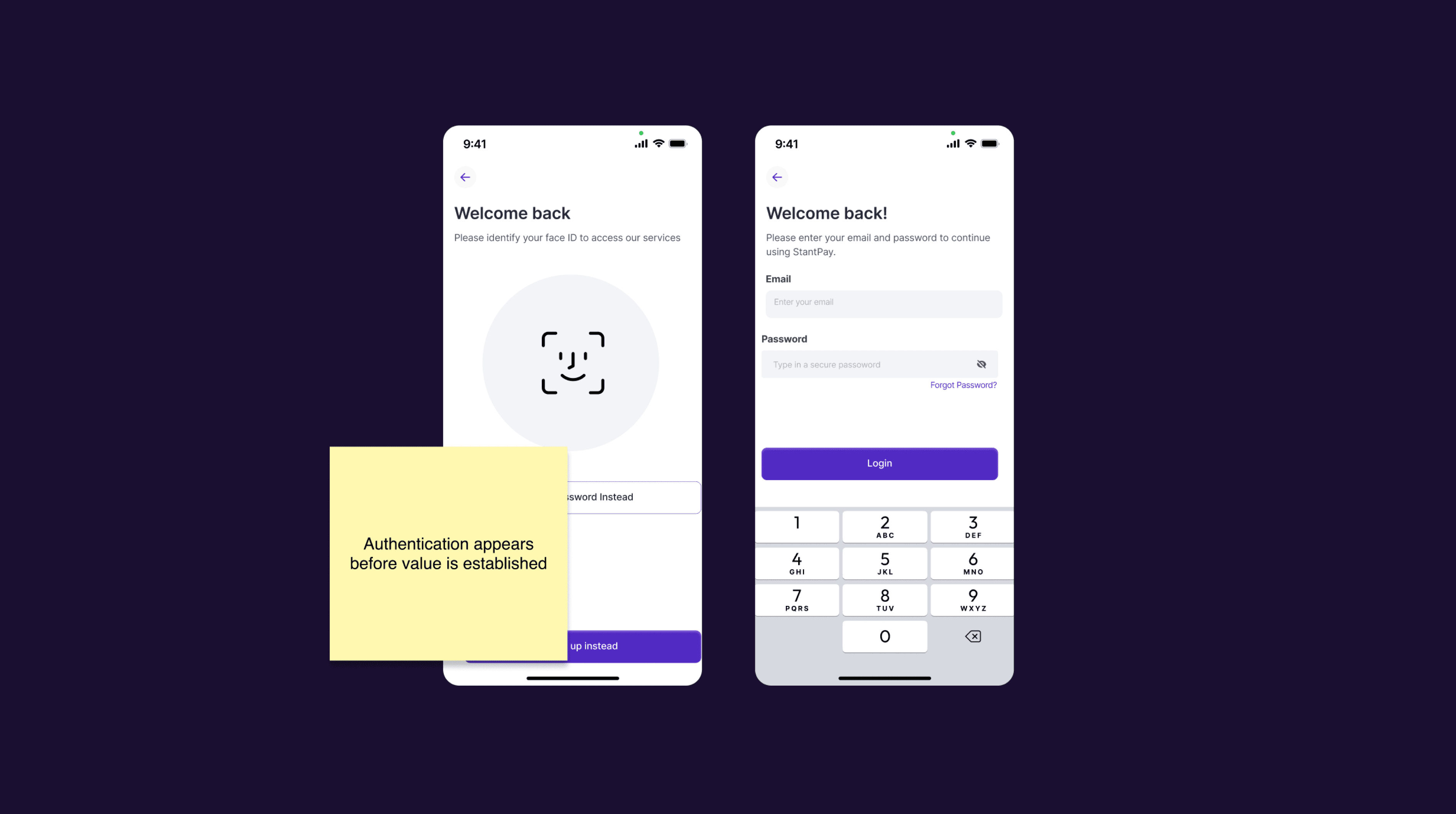
Insight 1: Commitment preceded value clarity
Users encountered security and authentication steps before understanding what the product enabled.
Early onboarding highlighted features, but did not clearly communicate what would happen next or why authentication was required at that moment.
Insight 1: Commitment preceded value clarity
Users encountered security and authentication steps before understanding what the product enabled.
Early onboarding highlighted features, but did not clearly communicate what would happen next or why authentication was required at that moment.
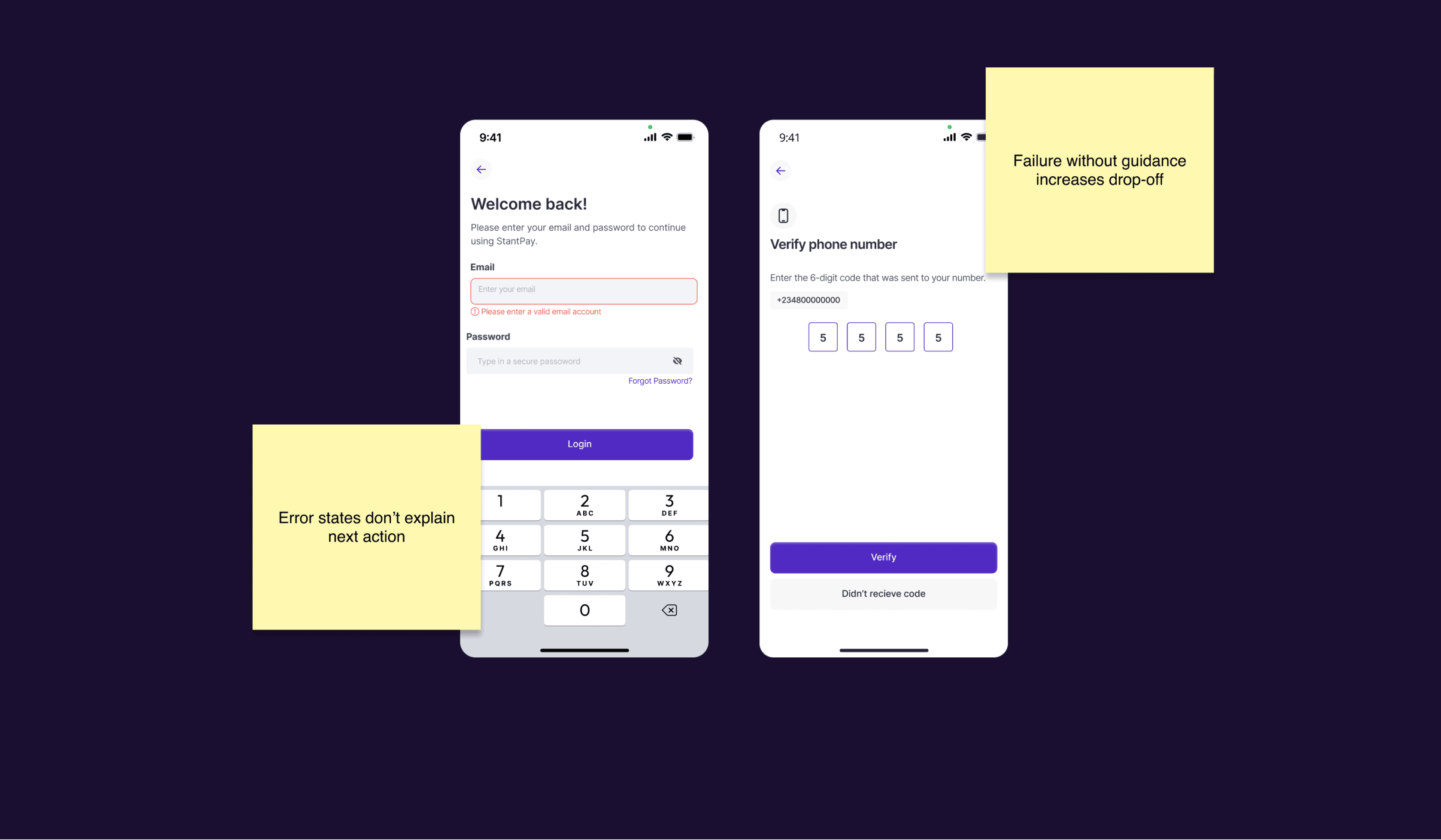
Insight 2: Error states increased hesitation instead of guiding recovery
When errors occurred, users were told something was wrong but not how to recover.
This increased uncertainty at a moment where confidence and reassurance were critical.
Insight 2: Error states increased hesitation instead of guiding recovery
When errors occurred, users were told something was wrong but not how to recover.
This increased uncertainty at a moment where confidence and reassurance were critical.
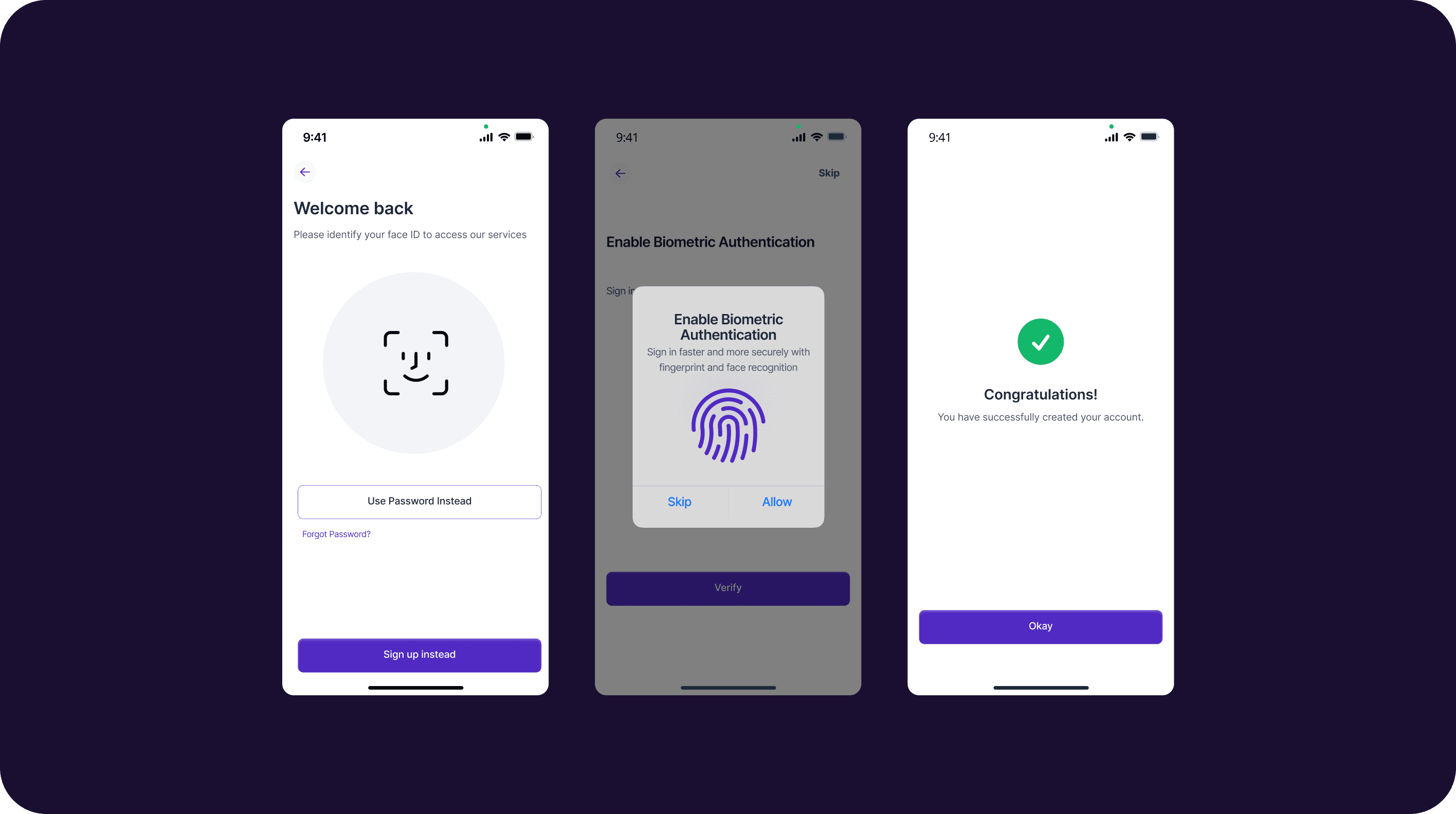
Insight 3: Users could not predict the path forward
The experience lacked clear progression cues.
Users could not easily tell how many steps remained, what success looked like, or when they would reach a usable state.
Insight 3: Users could not predict the path forward
The experience lacked clear progression cues.
Users could not easily tell how many steps remained, what success looked like, or when they would reach a usable state.
DESIGN APPROACH
DESIGN APPROACH
Based on discovery insights, the design approach focused on reducing early cognitive load, clarifying system intent, and sequencing trust-building moments before commitment. Rather than removing security steps, the goal was to reframe and guide users through them with clearer expectations and progressive disclosure.
Based on discovery insights, the design approach focused on reducing early cognitive load, clarifying system intent, and sequencing trust-building moments before commitment. Rather than removing security steps, the goal was to reframe and guide users through them with clearer expectations and progressive disclosure.
Based on discovery insights, the design approach focused on reducing early cognitive load, clarifying system intent, and sequencing trust-building moments before commitment. Rather than removing security steps, the goal was to reframe and guide users through them with clearer expectations and progressive disclosure.
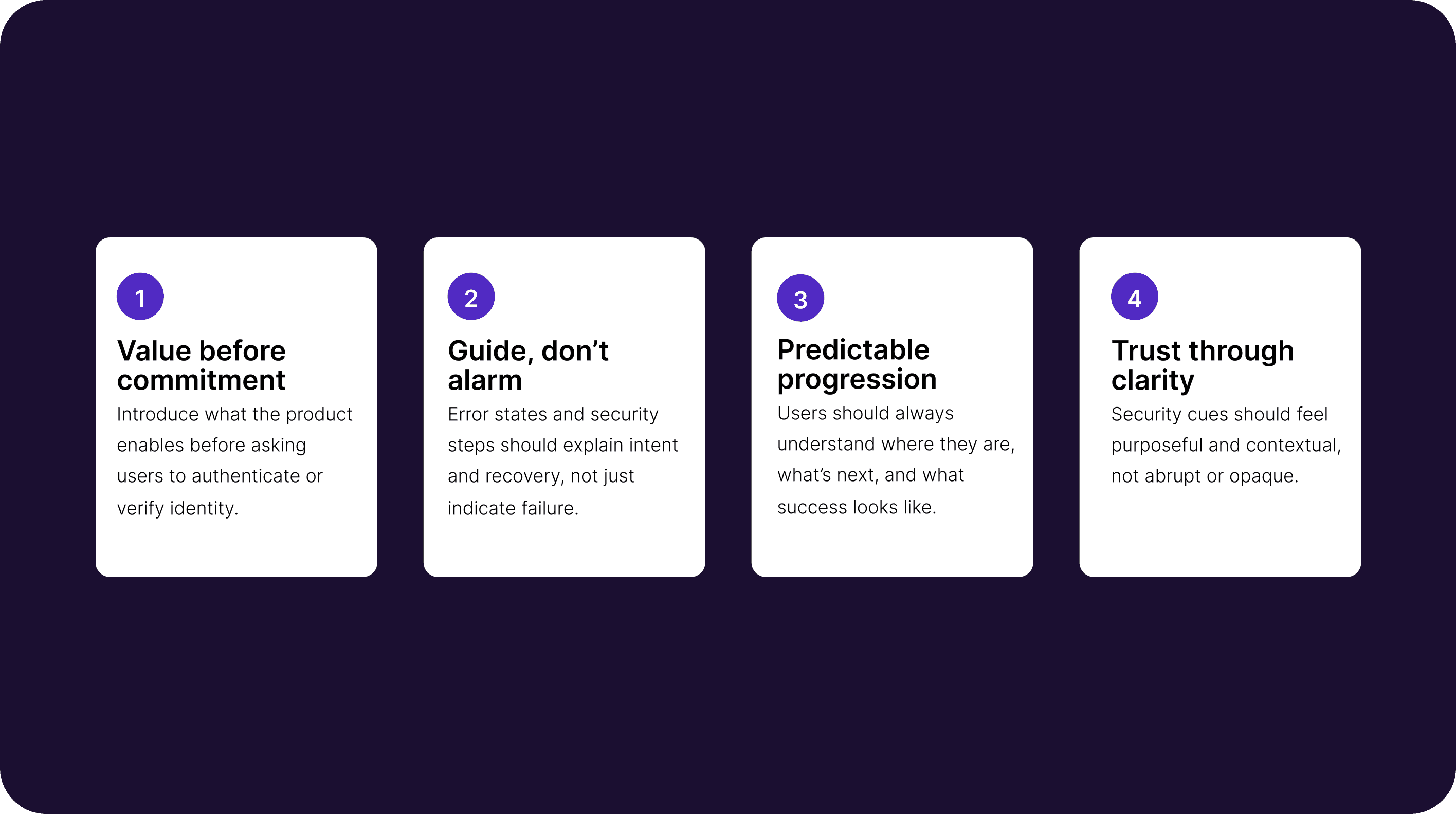
Design principles derived directly from onboarding and authentication discovery findings.
Design principles derived directly from onboarding and authentication discovery findings.
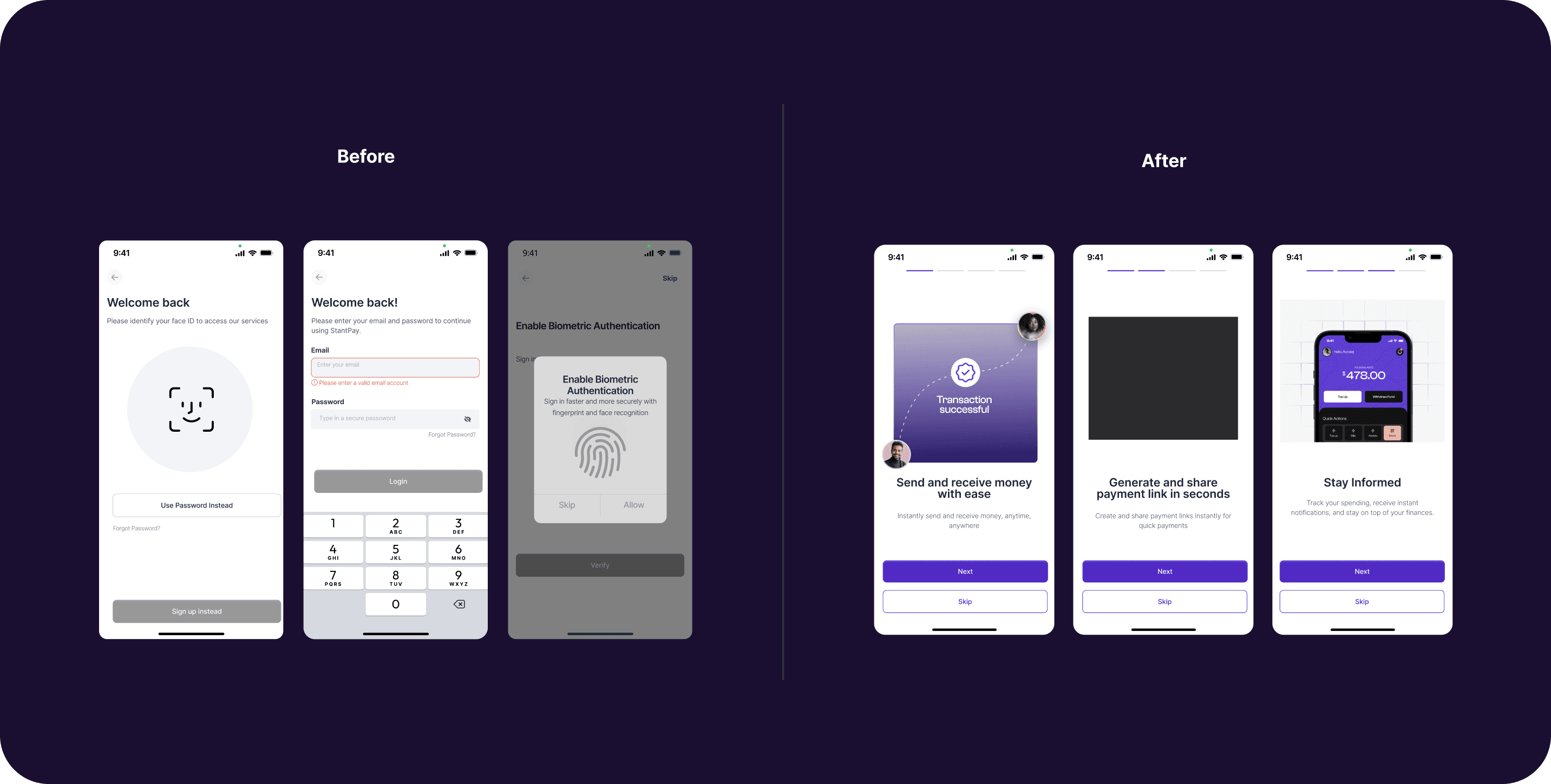
What changed
Security steps stayed
Order and explanation changed
Guidance increased before commitment
What changed
Security steps stayed
Order and explanation changed
Guidance increased before commitment
KEY User Flow
KEY User Flow
Based on discovery insights and design principles, I focused on restructuring a small number of critical flows where early trust, clarity, and confidence mattered most. These flows represent the highest-impact moments for first-time users and directly addressed the breakdowns identified during discovery.
Based on discovery insights and design principles, I focused on restructuring a small number of critical flows where early trust, clarity, and confidence mattered most. These flows represent the highest-impact moments for first-time users and directly addressed the breakdowns identified during discovery.
Flow 1: Onboarding + Security
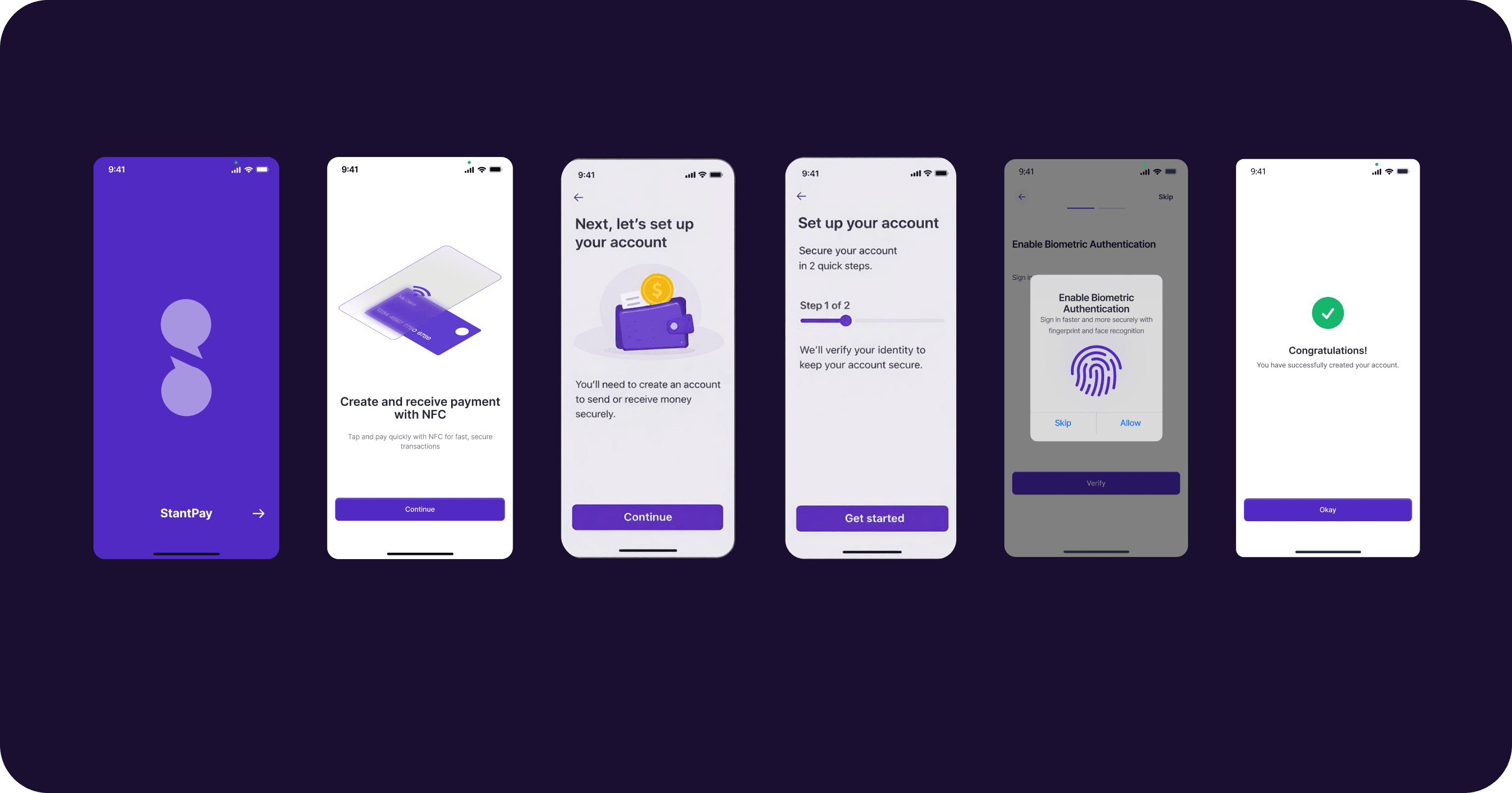
Onboarding makes the requirements clear upfront (account setup, identity, biometrics),
so users know what is needed before they try to move mone
Onboarding makes the requirements clear upfront (account setup, identity, biometrics), so users know what is needed before they try to move mone
Flow 2: Login + Password reset
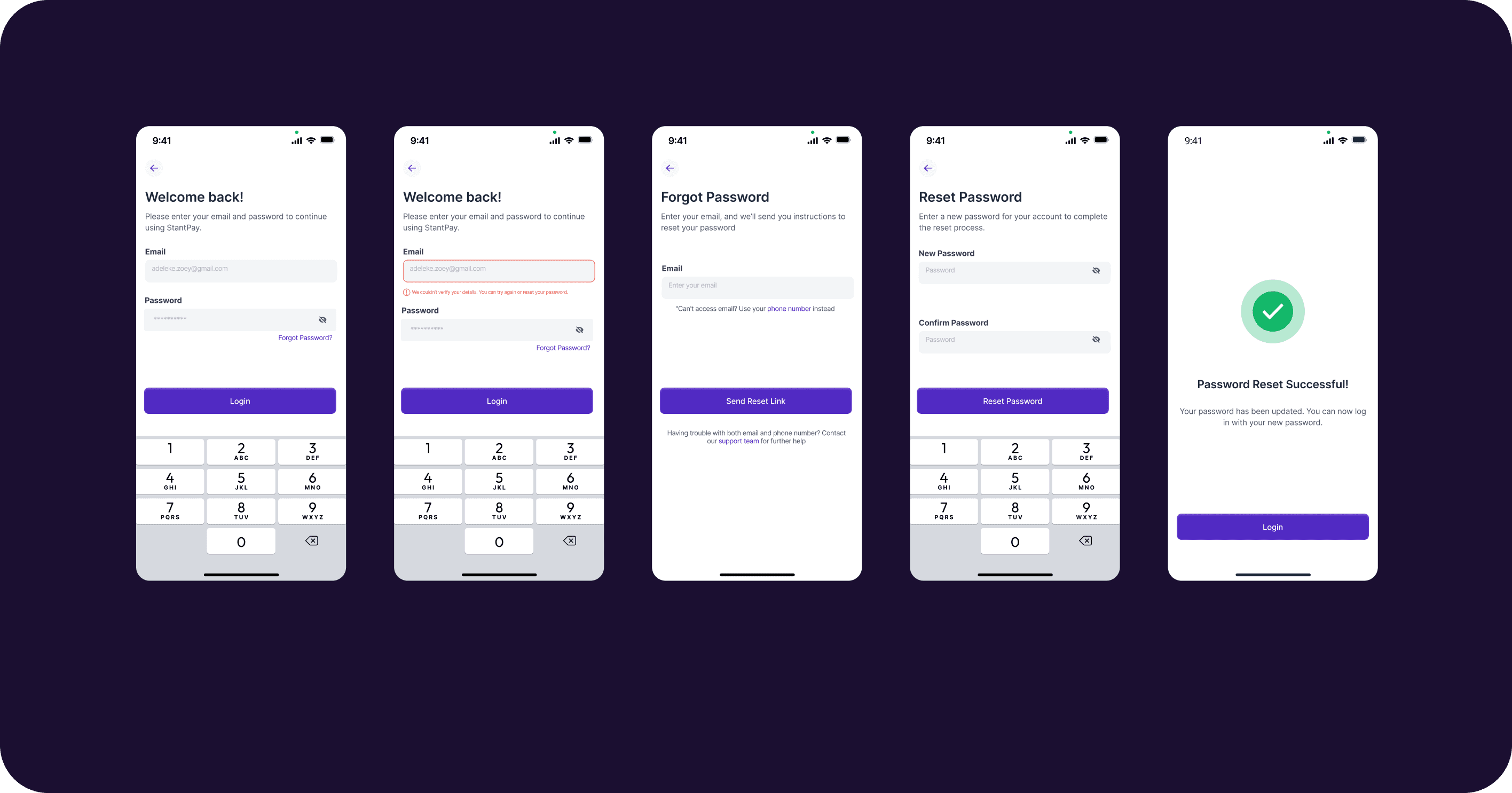
Error recovery is straightforward: clear messages, a simple reset path, and a clean return to login without getting stuck.
Error recovery is straightforward: clear messages, a simple reset path,
and a clean return to login without getting stuck.
Flow 3: First Transfer
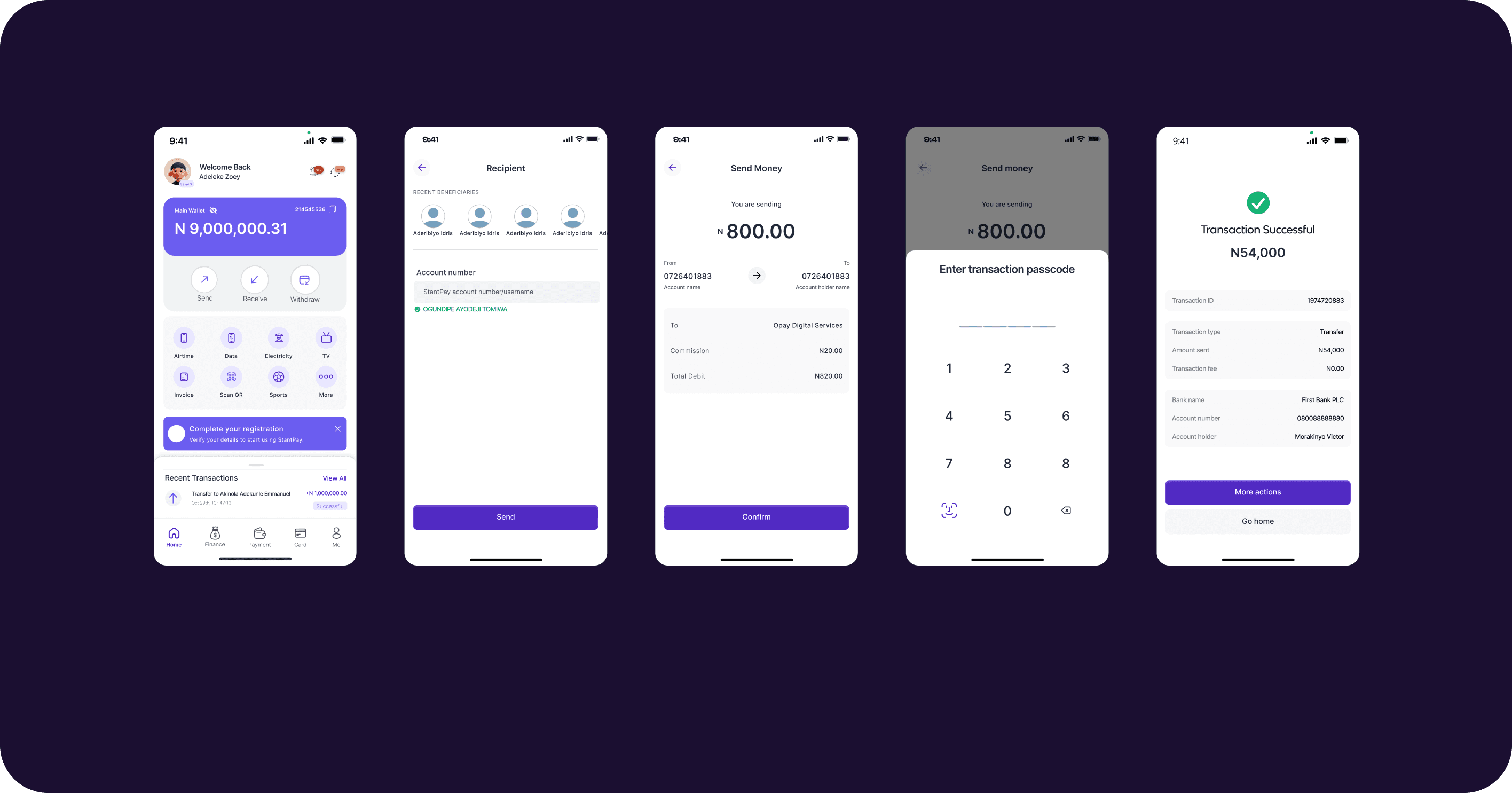
The first successful transfer is paced and confirmed step by step, so users feel in control from send to receipt.
The first successful transfer is paced and confirmed step by step,
so users feel in control from send to receipt.
Results / Evidence
Results / Evidence
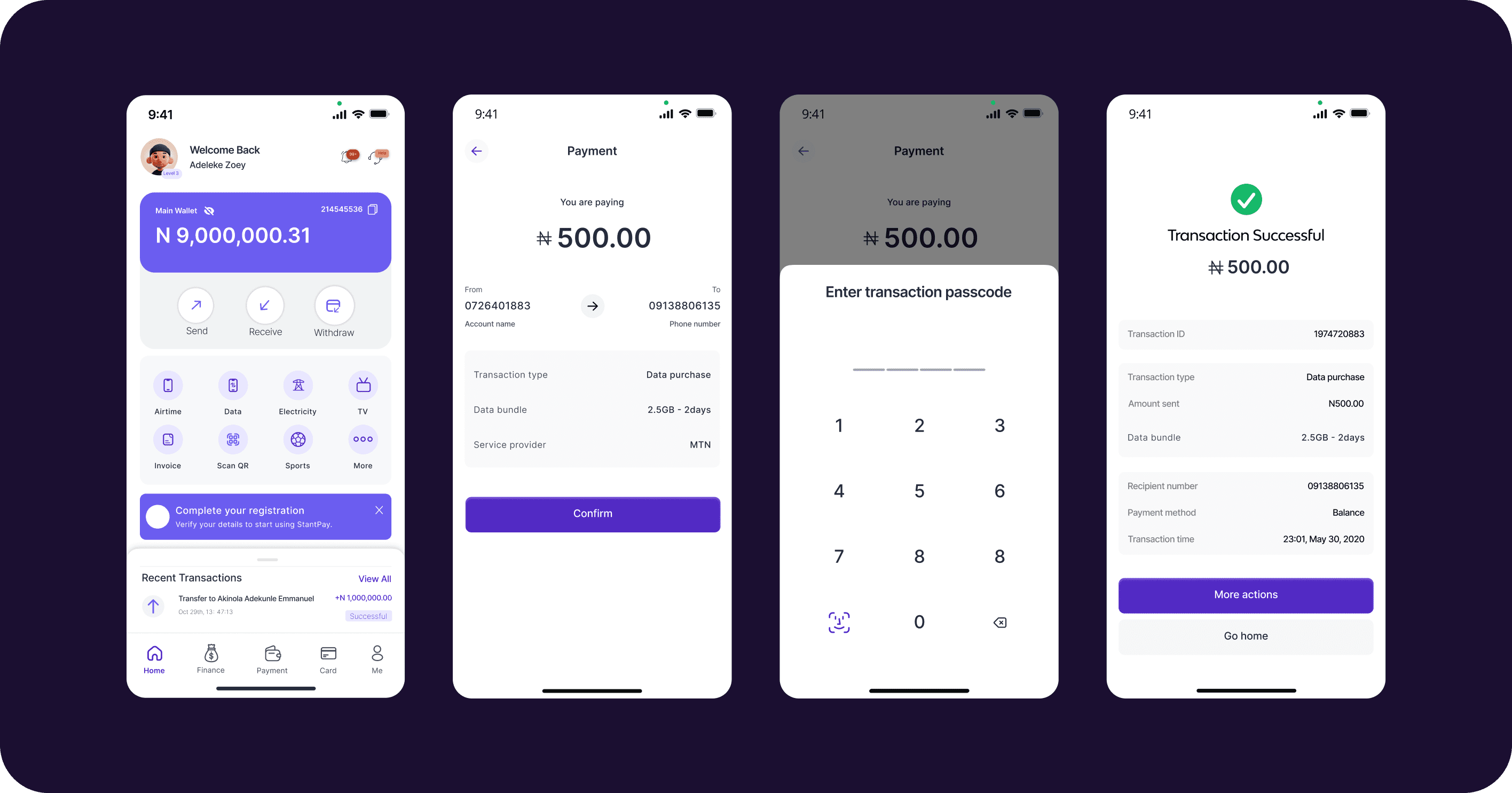
Designed a complete, build ready flow for onboarding, wage access, and recurring use, with an information structure that reduces confusion around eligibility, timing, and payout status. The system is structured to support fast first time success while keeping repeat actions simple.
What I would measure next
Sign up completion rate and time to complete
First payout request success rate
Support requests per payout request
Repeat usage over 30 days
Employer side setup completion and time to activate
Designed a complete, build ready flow for onboarding, wage access, and recurring use, with an information structure that reduces confusion around eligibility, timing, and payout status. The system is structured to support fast first time success while keeping repeat actions simple.
What I would measure next
Sign up completion rate and time to complete
First payout request success rate
Support requests per payout request
Repeat usage over 30 days
Employer side setup completion and time to activate
OUTCOME
& LEARNINGS
OUTCOME & LEARNINGS
OUTCOME & LEARNINGS
The final design delivered a clean, reliable payment experience focused on everyday use.
Key outcomes included:
Clear transaction states that reduce uncertainty
Predictable flows that support repeat usage
A mobile experience that balances speed with reassurance
A design foundation ready for future financial features
Key Learnings
Clarity is more valuable than speed in financial UX
Users trust systems that clearly explain what is happening
Familiar patterns reduce errors more effectively than novelty
Designing for repetition requires consistency above all
The final design delivered a clean, reliable payment experience focused on everyday use.
Key outcomes included:
Clear transaction states that reduce uncertainty
Predictable flows that support repeat usage
A mobile experience that balances speed with reassurance
A design foundation ready for future financial features
Key Learnings
Clarity is more valuable than speed in financial UX
Users trust systems that clearly explain what is happening
Familiar patterns reduce errors more effectively than novelty
Designing for repetition requires consistency above all



Product Designer · Systems & Marketplace Design
Phone: +234 805 131 3516
Email: israel.adeleke@outlook.com

